
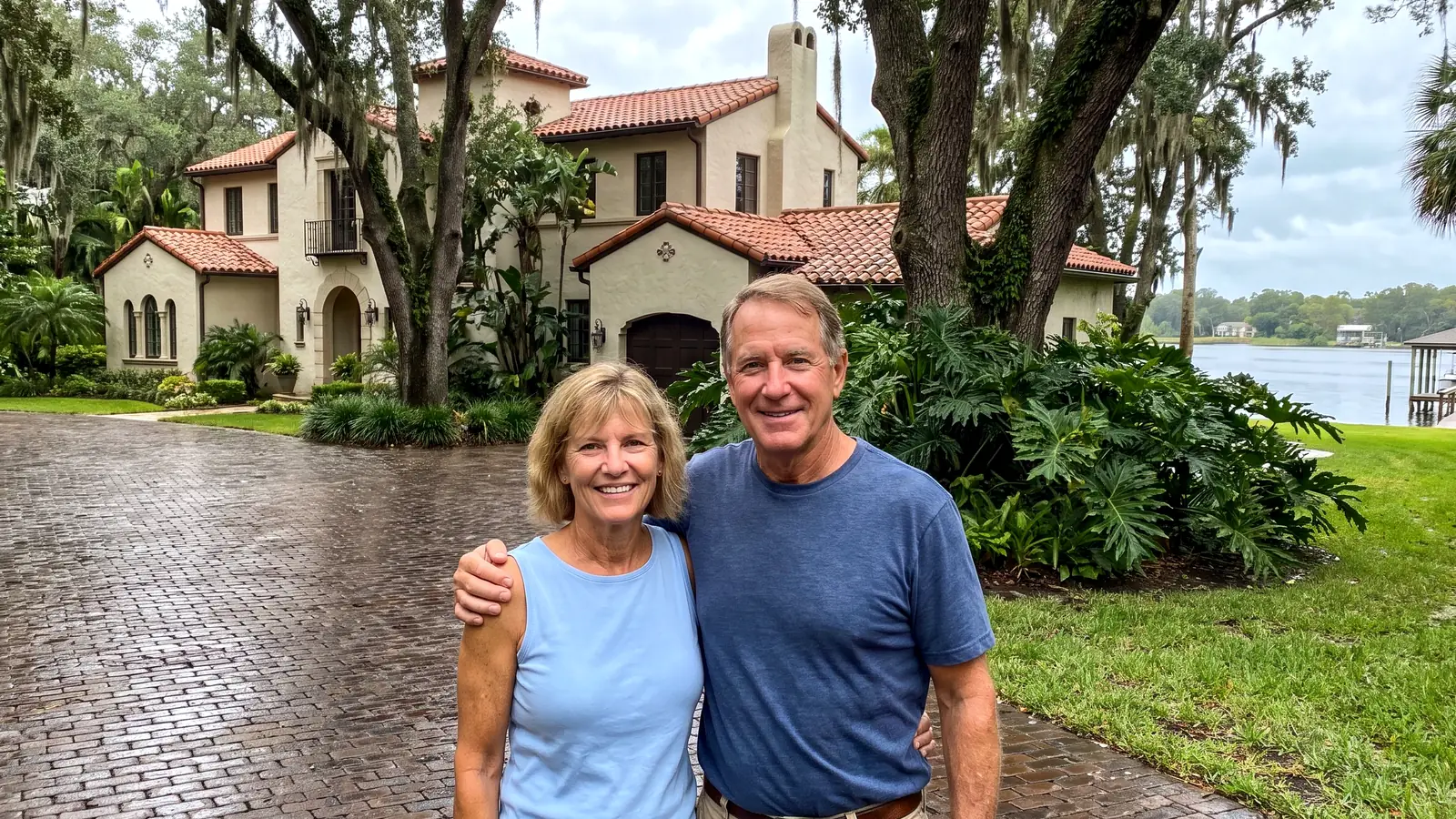
Paver sealing for Largo homes
Paver Sealing in Largo, FL
Largo drained a lake in 1916, so call (727) 472-4618 for a free estimate that checks how your pavers drain.
- Brings out deeper paver color
- Fresh joint sand helps lock pavers in place
- Gives weeds less room to grow
- Makes the surface easier to keep clean
- Free estimate, no obligation
Request a Free Estimate
Free, no obligation.
Fast, careful paver sealing in Largo
In Largo, a local contractor handles paver sealing for drives, pool decks and walks, and the first step is a free estimate. Reach out by phone or by request form, and an answer arrives within 1 business day, usually much sooner. To start, request a free estimate and list the areas you have in mind.
Say the drive has gone flat gray, one edge has turned green and sand is missing from the seams. Cleaning, re-sanding and one coat of sealer later, the whole run reads as a single tone again. To talk first, call (727) 472-4618 and describe the spot that bothers you.
Why hire a local paver sealing contractor in Largo?
Largo is a city of creeks, lakes and a drained lake bed, so water moves differently from one block to the next. A local contractor looks at where yours goes before any sealer is opened. To talk through your lot, request a free estimate.
Your date, your look
Pick the finish and the day. Matte stays calm and hides tire marks, while wet look shows scuffs sooner but gives richer color. Saying no costs nothing.
Water goes first
Before pricing, the contractor looks at where rain stands on your pavers, since low spots dry last and sealer needs a dry surface.
A yardstick for quotes
Tampa Bay companies list $1.25 to $2.50 per square foot for the wash, sand and seal. Lay any Largo bid next to it, and ask about gaps.
Walk-through at no charge
The contractor measures your Largo pavers, checks the joints and writes up a price. You owe nothing for the visit or the paper.
Get Your Free Estimate in Largo
Tell us about your pavers in Largo.
Free, no obligation
What paver problems show up most in Largo?
Summer rain carried in by the sea breeze
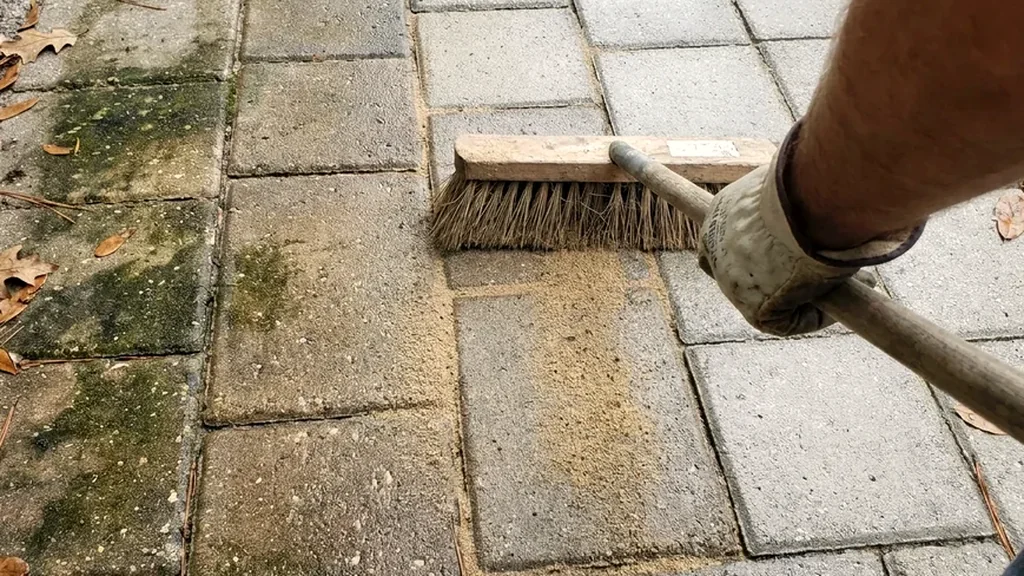
Largo's rain mostly comes in summer, when the sea breeze pushes Gulf moisture inland. A Tampa Bay paver company says those storms speed up joint sand loss. Open joints let soil in and give weeds a start, and loose pavers can wobble under a car. Fresh sand before the sealer is what stops that cycle. Open seams often hide at the lawn edge, where a street view misses them. Pavers that never fully dry between storms grow a green film, so the first sign is often a slick patch near the garage. Winters on the Pinellas peninsula run warmer than on the mainland and drier than the rest of the year, so summer is when pavers do their hardest work.
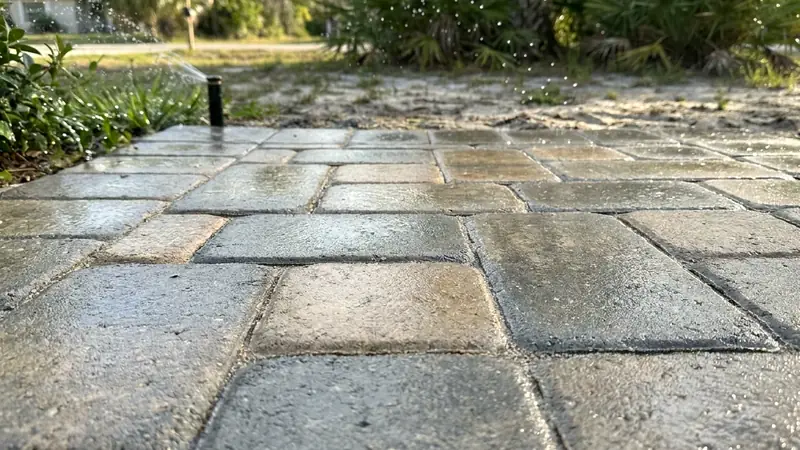
Rust fans from sprinkler heads
UF/IFAS explains that most Florida well water carries iron, which is the usual cause of orange sprinkler streaks. A head that throws onto a walk leaves rusty fans on pale pavers, and they come back each time the zone runs. A coat will not erase that stain. The wash step treats it before any sealer goes down. Show the contractor which sprinkler heads reach the stone. Pale pavers show rust most. Pinellas County sits on porous limestone, and the Gulf and Tampa Bay keep the air humid, so ask the contractor how rust gets treated.
Ground near old water
An 1845 survey recorded Lake Tolulu, later called Lake Largo, near where Largo Central Park Nature Preserve sits today. The lake was drained in 1916, and the land was built on. Allen's Creek and McKay Creek still carry water across the city. Pavers near low ground can stay damp longer, which means green growth, slow drying and a wash that needs more time. Mention any spot on your lot where water stands. A dip by the garage or a corner by the downspout is the usual place, and it tells the contractor where to look first. A corner by a downspout or beside a flower bed is the usual spot. Water covers about 5 percent of the city's area, and it touches both Tampa Bay and the Intracoastal Waterway, so runoff has plenty of places to go and plenty of places to linger. Largo's elevation runs from sea level to about 69 feet, so the same storm drains quickly on one street and pools on the next.
Pavers from many different years
Largo began with about 9/16 of a square mile and reached about 19 square miles by 2010 as it annexed land. Homes were built in different decades, so pavers carry different ages and different coats. Two drives a block apart can be many years apart in age. Some owners do not know what was applied last, and a past owner may never have written it down. Water-based sealer cannot go over solvent-based sealer, so that old coat has to be identified first. Ask the contractor to look at the date the home was built, which gives a rough idea of how many coats the pavers have had. A street built in the 1960s boom and one built after 2000 can sit a mile apart and need different plans. The city's own history says groves, farms, ranches and forests gave way to homes, shopping centers and light industry, so many blocks stand on former farmland.
Damp pool decks and lanais
A Pinellas County paver company says sealers with the wrong solids can get slick when wet, which matters at pools. Lanais and decks stay damp, and algae likes damp. Green film on a deck is slick, which makes the wash more than a looks matter. A deck needs both a clean surface and grip. Ask what traction the finished surface keeps, and say who uses the deck, from small children to older relatives. Pool owners can also ask about a finish that keeps its traction when wet. Algae on a deck is slick underfoot, which turns the wash into a safety step and not only a looks step.
Where in Largo should I ask about drainage before my pavers are sealed?
Start with any lot near water or low ground. Largo is dotted with lakes, such as 53-acre Taylor Lake, and Allen's Creek and McKay Creek drain the city to Tampa Bay and the Intracoastal. Pavers near any of these can stay damp longer, and green growth shows up sooner. Name your street when you request a free estimate, so the contractor can think through drainage.
Elevation runs from sea level to about 69 feet, so some Largo lots drain fast and others hold water. A higher lot can dry in hours, while a low corner may take a day or more. That changes the schedule more than the price, since the cost follows the area. Call (727) 472-4618 and say where water stands on your property.
Near Largo Central Park, which opened in 1995 on the old county fairgrounds, and the Pinellas Trail, which began at John S. Taylor Park in 1990, homes come from many decades. Older blocks may hold older pavers, and newer pockets may carry fresh sand. For a plan that fits your pavers, request a free estimate and say roughly when they went in.
What does paver sealing cost in Largo?
Expect Largo quotes to track the $1.25 to $2.50 per square foot that Tampa Bay companies list. Thick green growth, rust or lost joint sand nudges a job toward the top, while a clean surface with sand in place sits lower. A short walk can cost more per foot than a long drive, because setup time barely changes. To price yours, request a free estimate.
Ask what the price includes. A full job covers the wash, new joint sand and sealer, plus travel and setup, and a bid that names only sealer may leave sand and washing out. Written inclusions let you compare two bids on equal terms. Call (727) 472-4618 and ask for them on paper.
| Paved area | Typical example | Clean, sand and seal |
|---|---|---|
| 300 sq ft | Small patio or walkway | $375 to $750 |
| 600 sq ft | Two car driveway | $750 to $1,500 |
| 1,000 sq ft | Large driveway or pool deck | $1,250 to $2,500 |
| 1,500 sq ft | Driveway plus pool deck | $1,875 to $3,750 |
Math based on the $1.25 to $2.50 per square foot that Tampa Bay paver companies publish. Your contractor sets the actual price after seeing the surface. Repairs, leveling and stripping failed sealer are usually extra.
How does a paver sealing job work in Largo?
Reading the grade
A walk across your Largo pavers comes first, with a look at slope, shade and any spot where water stands after rain. Lifted or sunken pavers are flagged so they can be reset before the coat. Any old coat is identified before anything else. Mention the areas that bother you, and the notes will cover them. Take the contractor to the low corner by the garage first, since that is where puddles last the longest.
Washing the surface
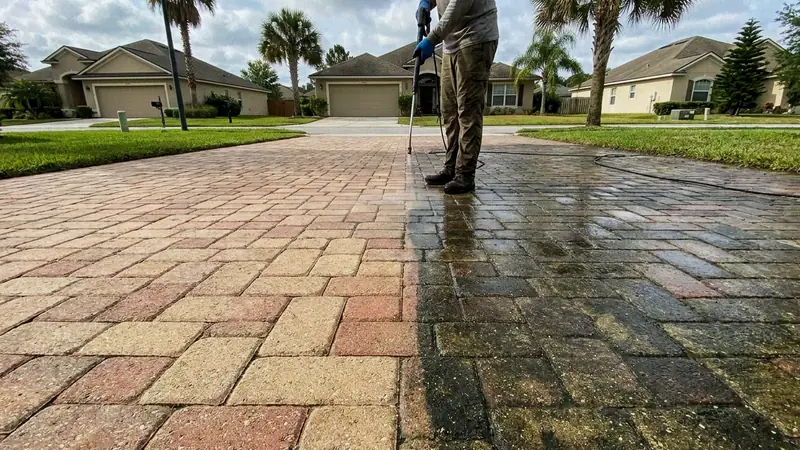
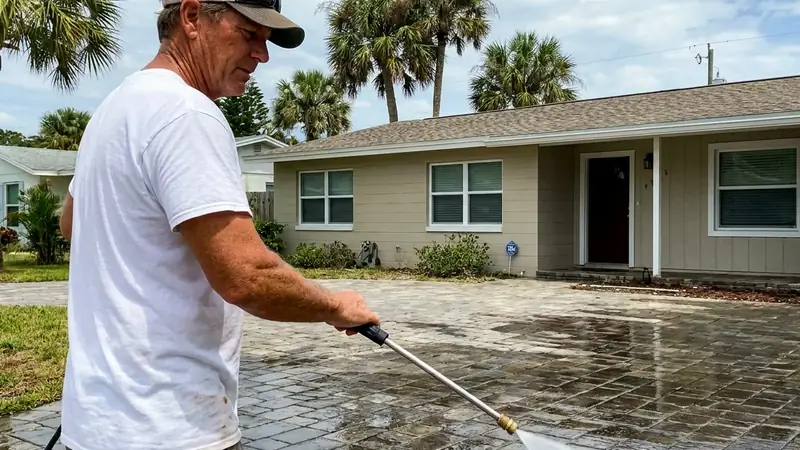
The wash takes off dirt, green growth, oil and rust left by irrigation. Beds, siding and screen frames are covered or rinsed. Pool decks may need extra time at damp edges and around drains. Nothing is sealed until the stone is clean.
Restoring joint sand
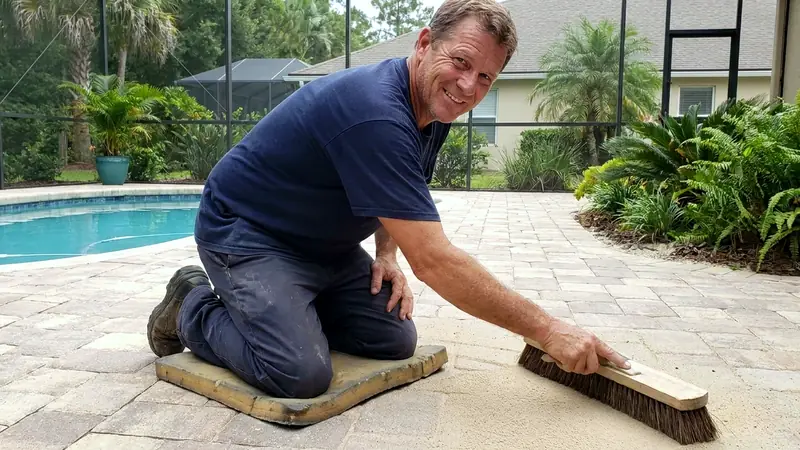
Because washing removes joint sand, new sand goes in first. Joints that are full steady the pavers and starve weeds. Where Largo's summer storms have emptied the seams, it takes more sand than owners expect. Pavers near lawn edges and downspouts often take the most. Surplus is swept off the face.
Letting low corners dry
Higher parts of a Largo lot dry fast, but low corners and shaded edges can hold water for a day. The contractor checks the seams as well as the top, and may coat the high parts first. Touch a seam with a fingertip, and if it feels cool and wet, the job waits.
Putting on the coat
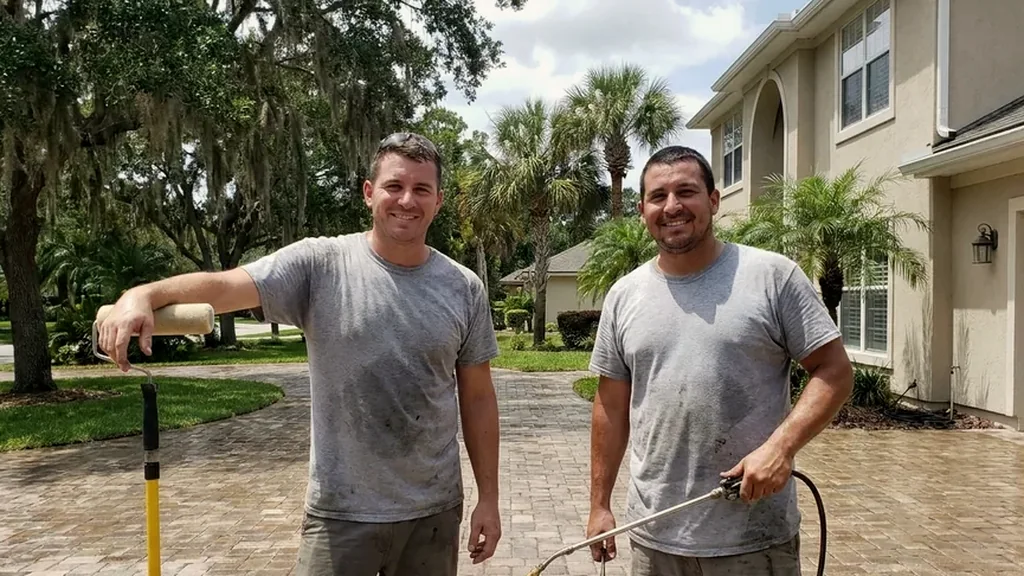
A sealer maker says a sprayer lays down an even coat, with a dry roller lifting the excess and a foam roller for borders. The finish goes on as chosen, in even passes, with overspray masked near walls. Ask how long to stay off, since it varies with the product. A clear forecast for a full day afterward is the goal.
Complete paver services in Largo
Largo work goes in a fixed sequence: look, wash, sand, dry, coat. Putting the coat last means nothing grimy gets trapped under it. Putting the dry just before it means no moisture does either. To learn what the sequence means for your lot, call (727) 472-4618.
If only one area fits the budget this season, start where wear is worst, usually the drive or a pool deck. Walks and borders can follow next season. A quote that lists areas separately makes that phasing easy. When you request a free estimate, say which areas matter most.
Sealer choice has two parts. The first is the family, water-based or solvent-based, and a solvent coat already down blocks a water-based product. The second is the look, matte for a calm finish or wet look for richer color that shows scuffs sooner. Call (727) 472-4618 to work through both.
Largo's rain comes mostly in summer, pushed inland by the sea breeze, so a wet-season date can slide. Cooler months run drier, which helps a coat cure. The contractor watches the forecast and phones if the day changes. To find a date that fits, request a free estimate.
Questions to ask before you hire
- Will you take before and after photos so I can see the result?
- If something looks wrong after the job, who do I call and how fast do I hear back?
- Can I book an early morning or a Saturday slot?
- Do you pull moss out of the joints by hand or wash it out?
- Can you remove the white powdery film that shows up on newer pavers?
- Does the estimate list the square footage of each area so I can compare quotes?
- Can you replace a cracked paver, or do I need someone else for that?
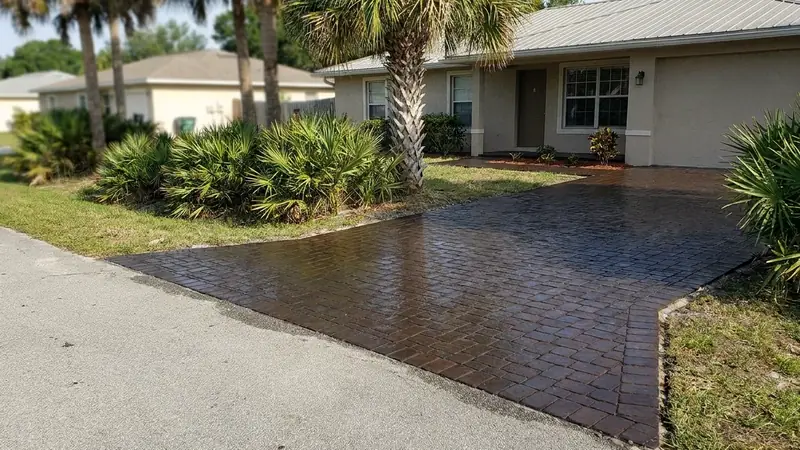
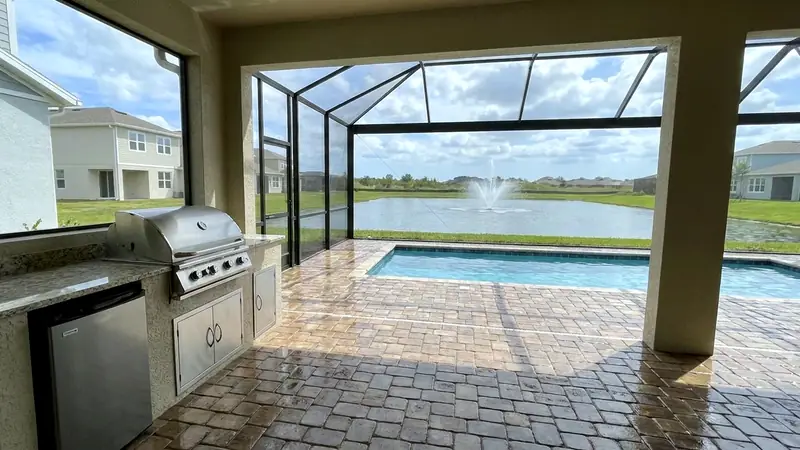
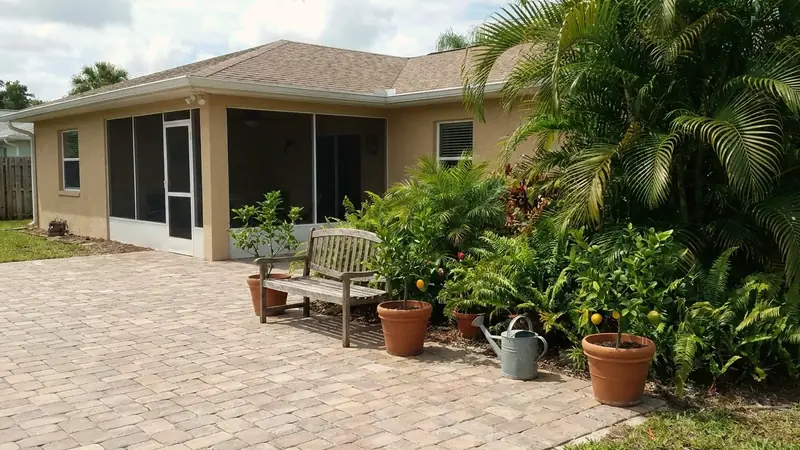
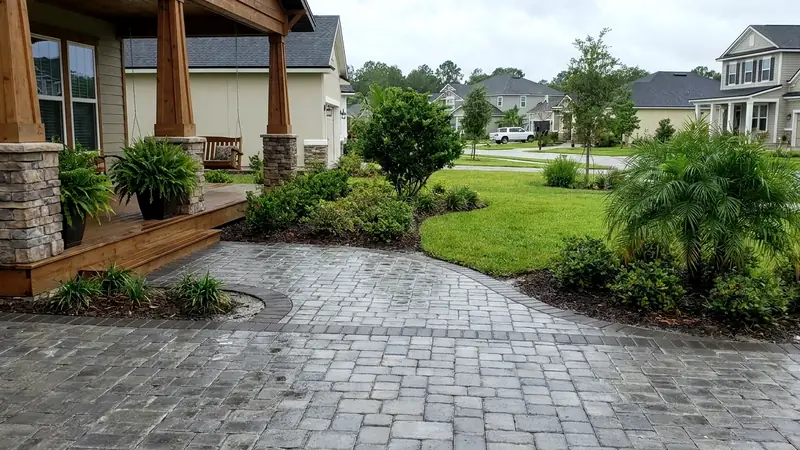
What do sealed pavers look like around Largo?
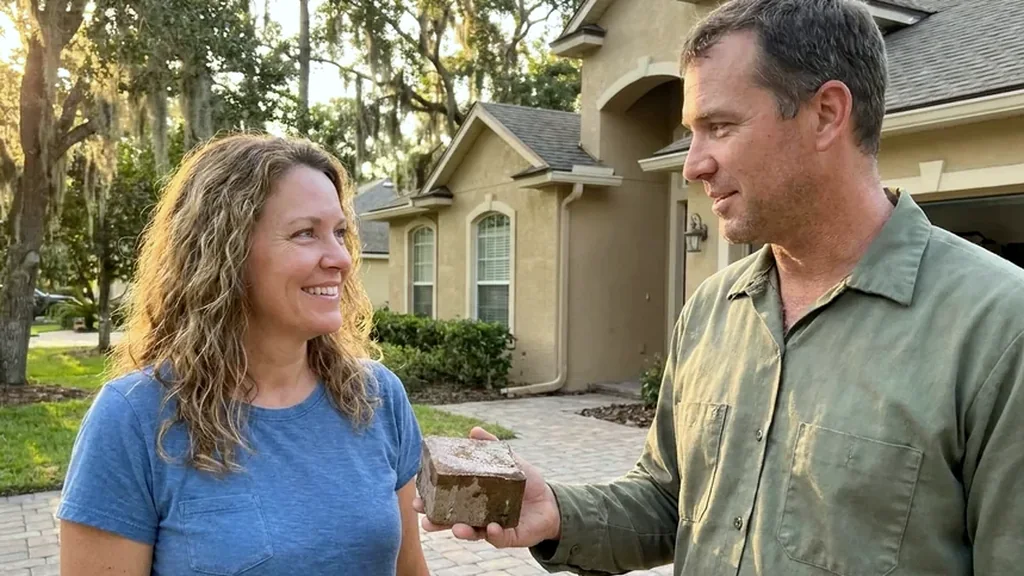
Why local matters in Largo
A contractor who works Largo knows the city has creeks, lakes and a drained lake bed in the middle of it, so drainage is the first question on many lots. Newcomers may never ask it. To talk to a contractor who works Pinellas County, call (727) 472-4618.
Timing is local too. Summer rain rides in on the sea breeze, so a sealing day needs clear hours on both sides. A local contractor pads the schedule and keeps a backup date, so a stray shower does not ruin the job. To see how that would suit your calendar, request a free estimate.
Largo has homes from many decades, so pavers carry coats that nobody wrote down. A contractor who knows the area asks what went on and when, then tests a small spot if the answer is unknown. That keeps a new coat from peeling. If you are unsure what is on yours, request a free estimate and share what you know.
What does Largo's past tell a homeowner about the age of their pavers?
Largo grew in bursts. The Orange Belt Railway arrived in 1888, the town was incorporated in 1905, and Lake Largo was drained in 1916. After World War II the city annexed land, growing from about half a square mile to about 19. Pavers of many ages now sit side by side, so request a free estimate and share what you know about yours.
Heritage Village, inside Pinewood Cultural Park, holds the 1852 McMullen-Coachman Log House, the oldest existing structure in Pinellas County, and the Seven Gables House. The 182-acre Florida Botanical Gardens sits in the same park and opened in December 2000, and Largo Central Park, on the old fairgrounds, opened in 1995. Call (727) 472-4618 from near any of these to book a visit.
Frequently Asked Questions
What is a typical cost to seal pavers in Largo?
Think per square foot first. Tampa Bay companies list $1.25 to $2.50, and Largo bids tend to follow it. Multiply by your paver area to test a quote, then allow for anything unusual, like steps or heavy stains. Ask for each area's square footage in writing.
Do pool decks in Largo need a special sealer?
They need grip. A Pinellas County company says the wrong solids in a sealer can leave it slick when wet. Ask what traction the finished deck keeps, and whether anti-slip is added.
Do low spots in a Largo yard affect sealing?
Yes. Sealer needs dry stone, and low corners hold water longer, so the contractor may coat the high parts first. Sunken pavers are reset before the coat goes on, so the finished surface sits level. Point out any spot where water stands.
What sealer is right for pavers in Largo?
There is no winner across the board. What is already on the stone narrows the field, since water-based sealer cannot go over solvent-based sealer, and the finish decides the rest. Write the product name on your calendar page for the next coat.
When is a good time of year to seal pavers in Largo?
Pick a dry stretch. Largo's rain falls mostly in summer, so the cooler, drier months are easier for the sealer to cure. Sealer needs a dry surface, so any month can work if the forecast is clear for a few days. Your contractor can tell you which window looks best once the pavers are seen. A contractor can suggest a window once the pavers have been seen.
Does sealing pavers in Largo come with any trade-offs?
The costs are repetition and timing. Coats wear, so the job returns every few years, and wet look shows scuffs sooner than matte. Sealer also needs dry stone, which can push a damp Largo lot back a day, and the wrong product can turn slick by a pool.
How often should I seal pavers in Largo?
Company quotes cluster around two to five years per coat, and a Pinellas County company calls 2 to 3 years typical. Sun, shade, traffic, irrigation and pool chemistry shift the timing. Splash a little water on dry stone, and if it soaks in, schedule the work.
Is it better to roll or spray paver sealer in Largo?
Many crews do both. A sprayer lays an even film, and a sealer maker says it helps prevent haze, while a dry roller soaks up pooled excess and a foam roller handles borders. The right mix depends on the sealer, so ask.
Ready for a Free Estimate in Largo?
Call (727) 472-4618 and tell us about your pavers.
Free, no obligation